It’s a nice attempt, but it seems like you don’t really understand either Kwame Nkruma’s motivations, nor what xenophobia actually is.
First off, xenophobia is a popular sentiment, not something that elites necessarily control. They can, obviously, via the media, but sometimes it just happens naturally in any society under pressure. For example, around 10 years ago in Zambia there was a rash of xenophobia attacks based on fears that Congolais migrants were doing human sacrifices following some “mad gasser attacks” panic. Yes, you read that right. The government tried to tell people to stop it and they didn’t.
Second, don’t drag Kwame Nkruma into the argument unless you have actually read some of his work. His motivations for copying the proto-EU in Africa were based on Marcus Garvey’s Pan Africanism to garner support, but Nkruma saw he needed economic and political weight. Which is true. Nkruma was good friends with Josip Tito, the President of Yugoslavia, which has managed to form a strong economy and manufacturing base around Yugoslavia’s unification. Nkruma wanted the same from Africa, rather than letting the colonial borders dilute political power.
Buuuuuuuuuuuut, no one like that idea. Regardless of who you or Nkruma blamed for why he got deposed, he spent a lot of time not in Ghana as president. He was gone, on his way to China. And hey, for what it’s worth, Nkruma was Ashanti, despised by a Ga army officer in Accra, an ethnically Ga part of the county.
Any reading you could recommend? I’m ashamed to say that I know next to nothing about Africa and it’s histories. Whenever I try to research on my own I get overwhelmed.
Guns, Germs, and Steel might be a pretty good starting point. That’s more global in scope, but the guns and steel parts apply.
An African History of Africa by Zainab Badawi is dense, but is a bit more in depth than a typical history that condenses 12,000 years of history into half a chapter, then 15 chapters on the last 400 years when Europeans were involved.
Otherwise, you’re looking more at histories centered on regions and cultures and moments in time. Which is why it’s easy to get overwhelmed. It’s a whole continent, its history is complex, just as is Asia or South America or Europe.


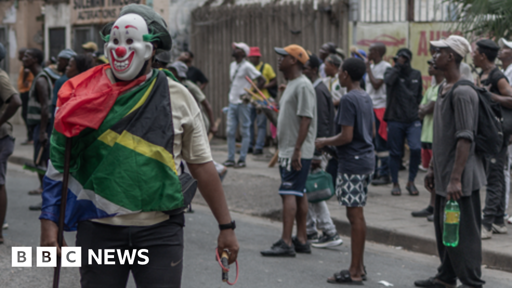
It’s a nice attempt, but it seems like you don’t really understand either Kwame Nkruma’s motivations, nor what xenophobia actually is.
First off, xenophobia is a popular sentiment, not something that elites necessarily control. They can, obviously, via the media, but sometimes it just happens naturally in any society under pressure. For example, around 10 years ago in Zambia there was a rash of xenophobia attacks based on fears that Congolais migrants were doing human sacrifices following some “mad gasser attacks” panic. Yes, you read that right. The government tried to tell people to stop it and they didn’t.
Second, don’t drag Kwame Nkruma into the argument unless you have actually read some of his work. His motivations for copying the proto-EU in Africa were based on Marcus Garvey’s Pan Africanism to garner support, but Nkruma saw he needed economic and political weight. Which is true. Nkruma was good friends with Josip Tito, the President of Yugoslavia, which has managed to form a strong economy and manufacturing base around Yugoslavia’s unification. Nkruma wanted the same from Africa, rather than letting the colonial borders dilute political power.
Buuuuuuuuuuuut, no one like that idea. Regardless of who you or Nkruma blamed for why he got deposed, he spent a lot of time not in Ghana as president. He was gone, on his way to China. And hey, for what it’s worth, Nkruma was Ashanti, despised by a Ga army officer in Accra, an ethnically Ga part of the county.
Any reading you could recommend? I’m ashamed to say that I know next to nothing about Africa and it’s histories. Whenever I try to research on my own I get overwhelmed.
Guns, Germs, and Steel might be a pretty good starting point. That’s more global in scope, but the guns and steel parts apply.
An African History of Africa by Zainab Badawi is dense, but is a bit more in depth than a typical history that condenses 12,000 years of history into half a chapter, then 15 chapters on the last 400 years when Europeans were involved.
Otherwise, you’re looking more at histories centered on regions and cultures and moments in time. Which is why it’s easy to get overwhelmed. It’s a whole continent, its history is complex, just as is Asia or South America or Europe.